Innovation in Higher Education and the Use of Effective Teaching for a Knowledge-Based Society at Hindi University

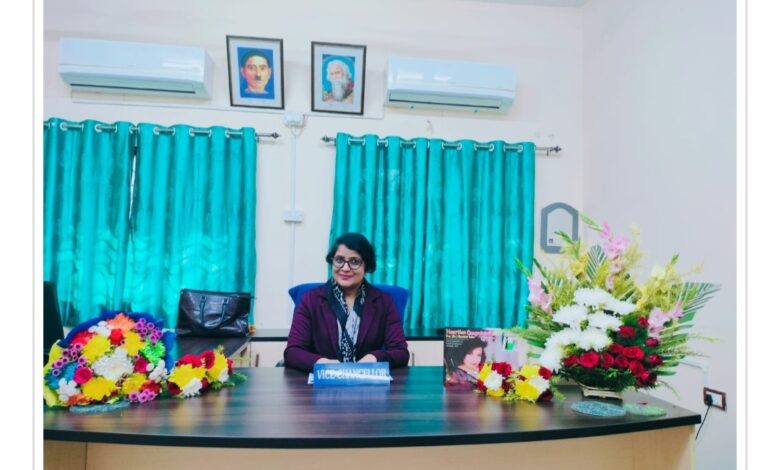
Kolkata (15 May) : Under the visionary guidance of Professor Nandini Sahu, the current Vice-Chancellor (2026) of the Hindi University of West Bengal, the institution’s academic, literary, and cultural activities have been infused with a newfound energy. Since her arrival, a creative and positive atmosphere has flourished, actively promoting research and education in Hindi language, literature, and allied fields. This era of excellence is reflected in student achievements: Raj Jaiswal (Hindi Dept) secured AIR 1 in the IBPS PO exam, Nitish Kumar Yadav (Translation Studies) ranked 17th in SSC CHT 2024, and students like Kundan Verma, Arti Kumari, Kabita Kumari, and Punam Kumari Bind successfully cleared NET and BPSC examinations for prestigious teaching roles.
The primary initiatives undertaken by Professor Sahu include transformative academic reforms such as the implementation of the National Education Policy and employment-oriented courses. Her strategy focuses on research and innovation through a startup culture, digital transformation via the Samarth Portal, and extensive infrastructural development, including smart classrooms and a central library. Furthermore, internationalization through foreign collaborations and administrative strengthening has ensured a transparent, student-centric selection process and the timely declaration of results.
Significant emphasis has been placed on core teaching skills, with the university organizing its first-ever translation workshops and student skill education programs. These initiatives focus on introductory, explanation, questioning, and reinforcement skills. Under Professor Sahu’s leadership, the university has pivoted toward holistic development—a curriculum fostering critical thinking and problem-solving skills—complemented by the creation of a dedicated university website (www.hindiuniversity.ac.in).
This student-centered environment provides modern infrastructure, including digital learning technologies and e-learning resources. Notably, 2025 marked the first editing of “HUJIS”, a Peer Reviewed, Bi-Lingual, Bi-Annual, International Research Journal, and the publication of the first university newsletter. Alongside the ongoing Comparative World Literature lecture series featuring eminent scholars, these innovations continue to thrive, successfully realizing the goal of effective teaching for a knowledge-based society.